Mira Murati Builds AI to Collaborate, Not Replace Human Jobs
· Will Knight
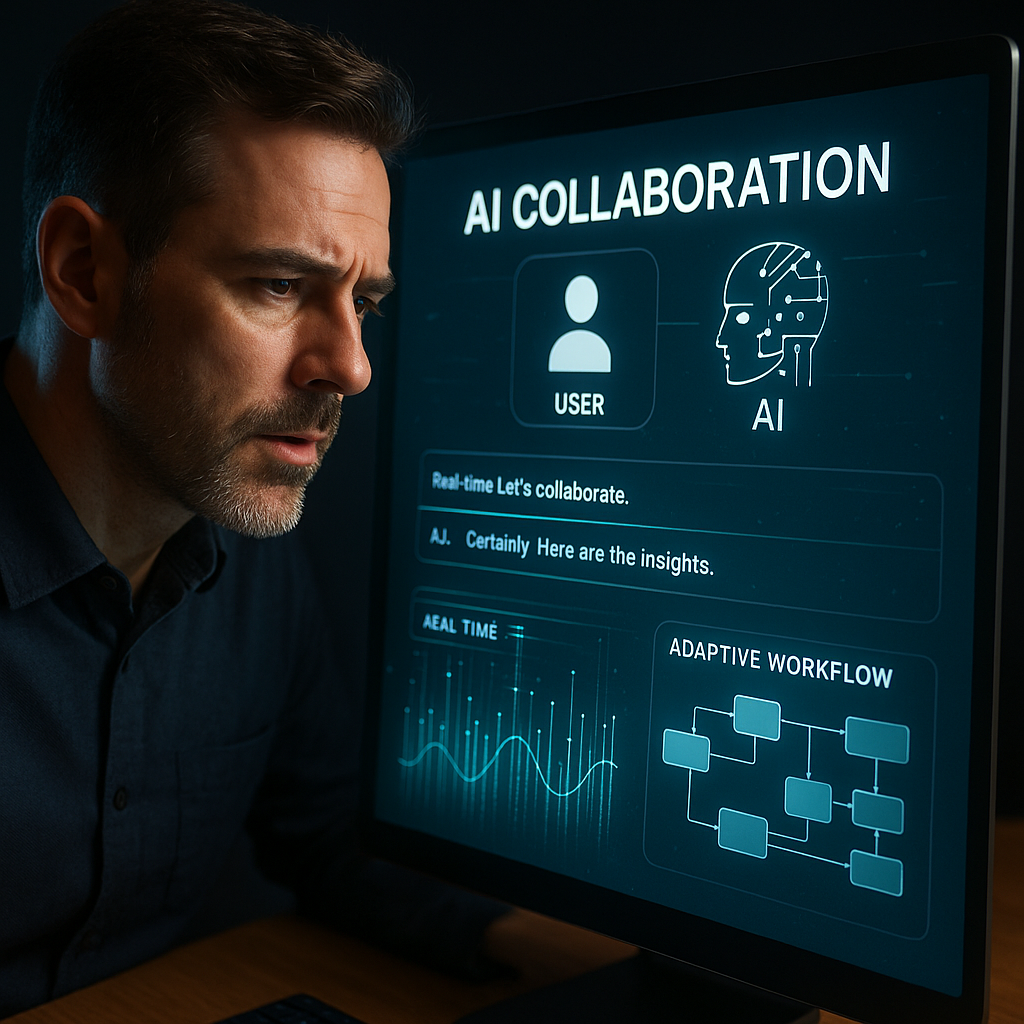
Title: Building for Collaboration, Not Replacement: Inside Thinking Machines Lab’s Vision for Human-AI Partnership Byline: [Tech Blog Editorial Staff] Date: [Current Date] Reading…
The narrative around artificial intelligence has long been dominated by a single, looming question: Will AI take our jobs? For Mira Murati, founder of Thinking Machines Lab and former Chief Technology Officer of OpenAI, that question is the wrong one to ask. In a recent interview, Murati made her position unequivocally clear: she is not building technology designed to automate human workers out of existence. Instead, she is focused on creating AI systems designed for genuine collaboration—tools that augment human capability rather than replace it.
This distinction, while subtle in phrasing, carries profound implications for the future of work, enterprise software, and the strategic direction of one of the industry’s most closely watched new ventures.
A Shift in Philosophy from the Lab’s Leader
Thinking Machines Lab, founded by Murati after her departure from OpenAI, represents a deliberate pivot away from the "AI as replacement" model that has fueled both excitement and anxiety across the tech landscape. Murati brings to her new venture a deep understanding of what large language models can achieve, having overseen the development of systems like GPT-4 and DALL-E during her tenure at OpenAI. Yet, she is acutely aware that raw capability without intentional design can lead to unintended consequences—chief among them being the displacement of human judgment in critical workflows.
"We are at a crossroads," Murati explained. "We can either build AI that treats humans as bottlenecks to be eliminated, or we can build AI that treats humans as partners to be empowered. Thinking Machines Lab is firmly in the latter camp."
This philosophy is not merely a marketing position. It informs the core architecture of the products being developed at the startup. Instead of creating autonomous agents that complete entire tasks from start to finish without human input, the company is engineering systems that operate as "co-pilots" or "collaborators"—interpreting human intent, suggesting alternatives, and then handing control back to the user for final decisions.
The Collaboration Blueprint: Practical Applications
For professional audiences, the distinction becomes clear when examining how these systems will operate in real-world environments. Consider a financial analyst tasked with preparing a quarterly earnings report. A replacement-focused AI might ingest raw data, generate the report, and present it as a finished document with minimal human oversight. A collaboration-focused AI, by contrast, would parse the data, highlight anomalies, suggest visualizations, and then ask the analyst to validate assumptions, adjust parameters, and approve the final narrative.
The key difference lies in accountability and trust. Murati argues that in high-stakes domains like healthcare, law, finance, and engineering, the "black box" approach is inherently risky. Professionals need to understand why an AI reached a particular conclusion, and they need the agency to override it when necessary.
"True collaboration means the human remains in the loop, not as a rubber stamp, but as the ultimate decision-maker," Murati noted. "The AI provides speed, scale, and pattern recognition. The human provides context, ethics, and judgment. Neither can replace the other in a well-designed system."
Why This Matters Now: The Context of Skepticism
Murati’s emphasis on collaboration comes at a time when public and regulatory skepticism toward AI is at an all-time high. High-profile incidents involving biased hiring algorithms, misleading chatbot outputs, and concerns over job displacement have made business leaders cautious. Many enterprises are hesitant to deploy AI at scale because they fear losing control over their processes and data.
By focusing on collaborative systems, Thinking Machines Lab is positioning itself to address these pain points directly. The approach offers a path that promises efficiency gains without sacrificing human oversight. It also aligns with emerging regulatory frameworks in Europe and North America that mandate meaningful human involvement in automated decision-making.
Furthermore, the philosophical stance resonates with a growing sentiment among knowledge workers. Surveys consistently show that while employees are open to AI tools that reduce drudgery, they remain deeply uneasy about systems that could make their roles redundant. A collaborative model directly addresses that unease, framing AI as a career enhancer rather than a career ender.
Industry Reactions and Competitive Landscape
Murati’s announcement has drawn significant attention from investors and competitors alike. Thinking Machines Lab has reportedly secured substantial funding, with backers drawn to a vision that promises growth without the reputational risks associated with more aggressive automation strategies.
Competitors like Microsoft, Google, and Anthropic are also exploring collaborative AI, but Murati’s lab is unique in making this philosophy the foundational principle of the entire company, rather than a feature of a single product. The startup is currently hiring across engineering, research, and product roles, with a particular focus on experts in human-computer interaction and safety research.
Industry analyst Dr. Elena Vasquez, who covers enterprise AI, commented on the development: "Mira Murati is betting that the market is ready for AI that respects human expertise rather than subverting it. If she is right, we could see a major shift in how enterprise AI is deployed—moving away from black-box automation toward transparent, collaborative systems that actually build trust with users."
Looking Ahead: The Long-Term Vision
For the immediate future, Thinking Machines Lab is focused on the "tool-building" phase: creating underlying models and interfaces that prioritize interpretability, user control, and collaborative workflows. The company has not yet announced a specific product launch date, but Murati indicated that early prototypes are being tested with select enterprise partners.
The long-term vision is ambitious but grounded. Murati envisions a world where AI handles the tedious, repetitive aspects of work—data cleaning, initial research, formatting, and compliance checks—while humans focus on strategic thinking, creative problem-solving, and relationship building. In this world, job roles evolve rather than disappear.
"We are not trying to build a machine that thinks for you," Murati concluded. "We are building a machine that thinks with you. That distinction is not just philosophical; it is practical, ethical, and ultimately, it is the only way to ensure that AI benefits as many people as possible."
For an industry often accused of moving too fast and breaking things, Thinking Machines Lab is offering a different narrative—one where progress and partnership go hand in hand. Whether that narrative translates into market success remains to be seen, but for now, it provides a compelling alternative to the automation-first approach that has defined much of the AI conversation.
Key Takeaway: The future of AI may not be about machines doing everything, but about machines and humans doing better work together. Thinking Machines Lab is betting the company on that idea—and the tech industry is watching closely.
---