The Dark Side of AI Citations: Why Success Is Becoming a Crisis for Scientists
· Joshua Dzieza
Last summer, a postdoctoral researcher named Peter Degen got a strange assignment from his supervisor. One of the supervisor's papers was being cited way too much.
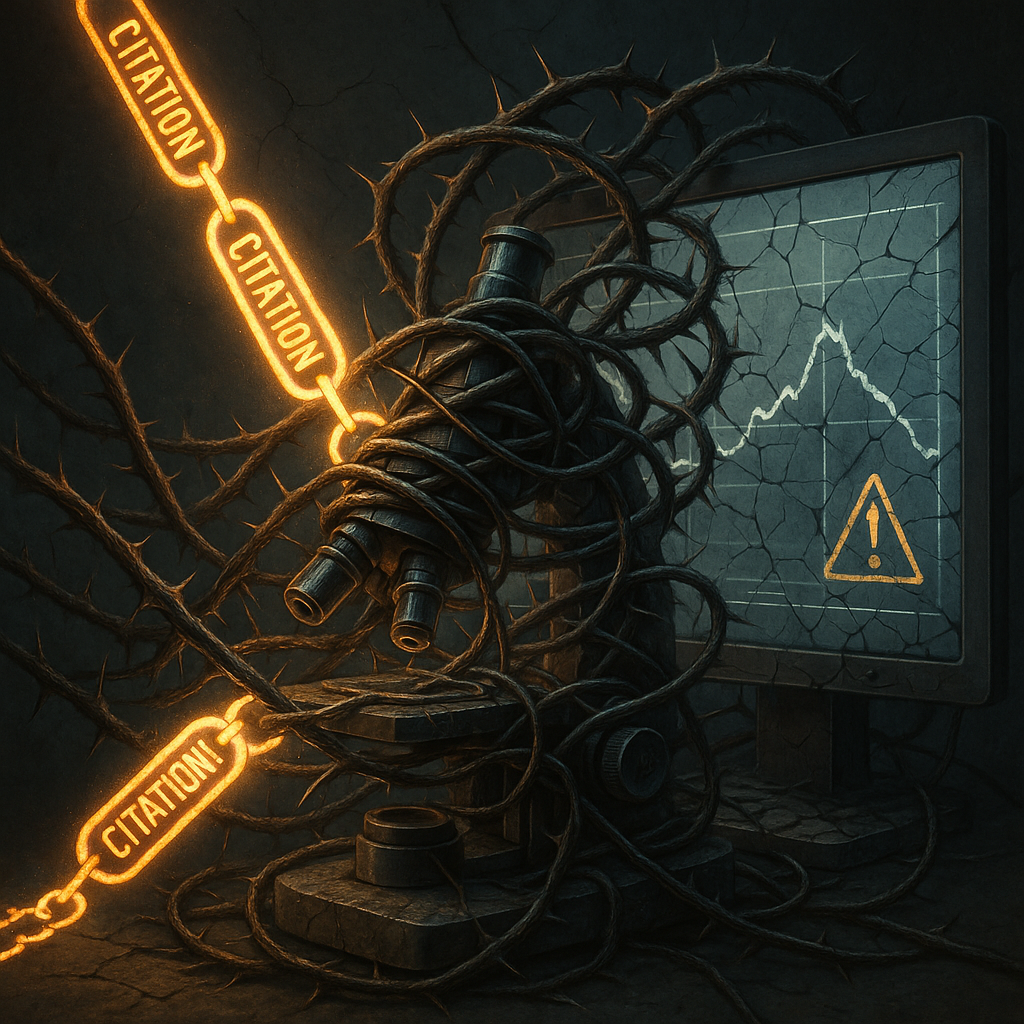
Last summer, a postdoctoral researcher named Peter Degen got a strange assignment from his supervisor. One of the supervisor's papers was being cited way too much. Not the good kind of too much, either. The paper, published in 2017, had originally racked up a respectable few dozen citations. But suddenly, it was being referenced every few days, adding up to hundreds of citations and placing it among the most cited works of the professor's career. Most academics would be thrilled. Degen was asked to figure out what was going on.
Turns out, the citations were coming from a specific source: papers published in a cluster of可疑 journals. They weren't referencing the paper because it was foundational or groundbreaking. They were citing it in a way that looked mechanical, almost automated, as if to pad citation counts or game academic metrics. Degen dug into the data and found a pattern that suggested coordinated citation manipulation, a practice where authors or journals inflate references to boost their own standings in ranking systems.
This isn't just a niche academic drama. Citation fraud undermines the entire system of scholarly credit, warping how research is evaluated and funded. If a few bad actors can prop up their numbers by feeding off honest work, it makes it harder to tell which ideas actually move science forward. Degen's investigation essentially caught a digital paper trail of that manipulation in action.
The bigger question now is how many other papers are being quietly milked the same way. Isolated cases get caught, but the scale of the problem is still unknown. For now, Degen's supervisor has a paper that's famous for all the wrong reasons, and the rest of us have a clear warning that the currency of academia can be counterfeit just like any other.